
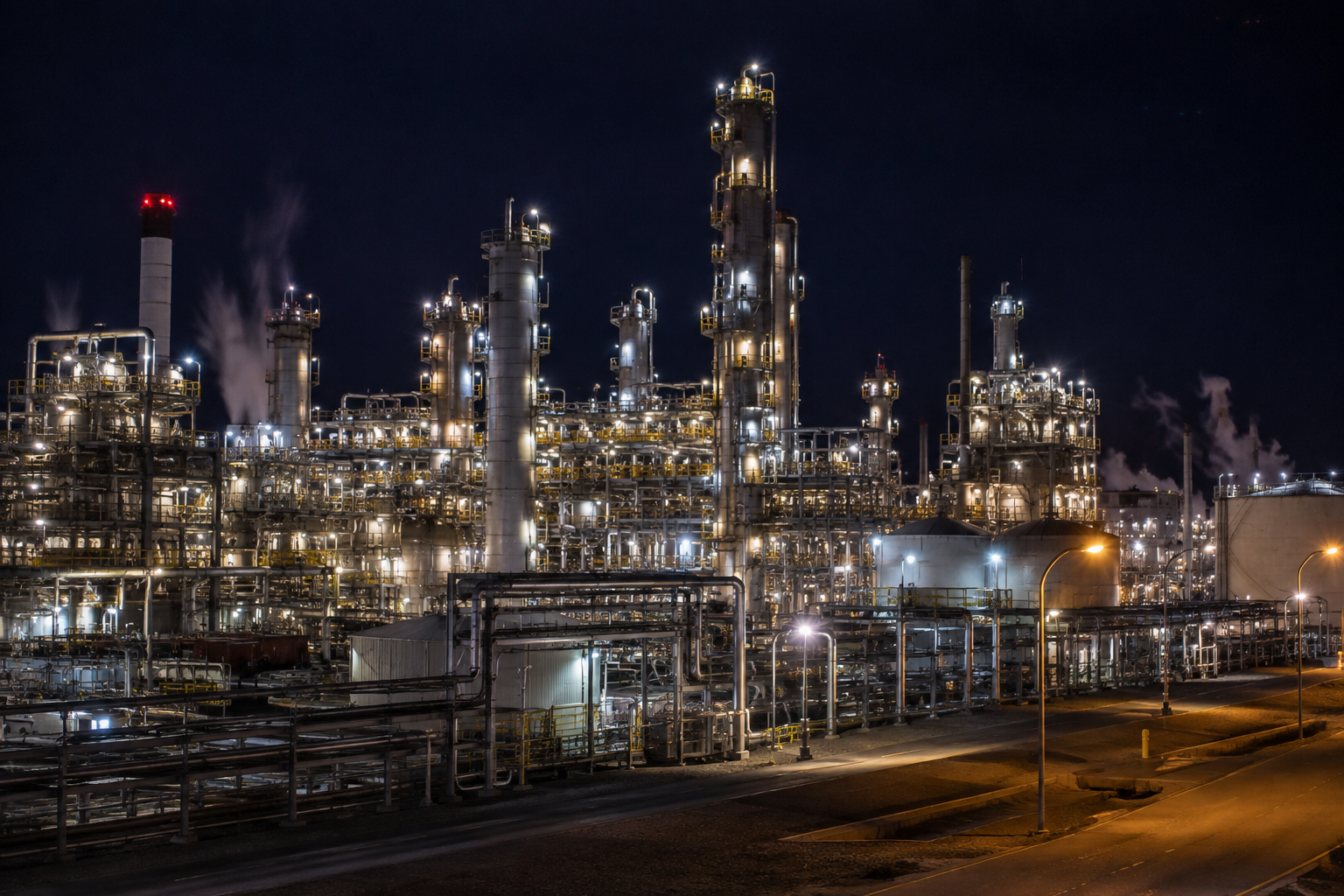
Hazardous Location Lighting Designed for Demanding Industrial Environments
Hazardous industrial environments require a different level of consideration than conventional commercial spaces. Facilities where flammable gases, vapors, combustible dusts, fibers or other potentially hazardous materials may be present can require lighting systems selected specifically for the classified conditions of the installation. LEDTOMORROW helps industrial customers evaluate hazardous location lighting requirements as part of a broader facility-specific lighting strategy.
From refineries and chemical processing facilities to manufacturing plants, storage areas and other specialized industrial environments, LEDTOMORROW can help customers evaluate lighting performance, application conditions, photometric requirements, retrofit opportunities and project documentation while working within the requirements established for the facility.
A More Careful Approach to Hazardous Location Lighting
Hazardous location lighting should never be approached as a simple replacement exercise. The environment, area classification, operating conditions, mounting location and facility requirements must all be understood before an appropriate lighting strategy can be developed.
LEDTOMORROW approaches these applications by first understanding the facility and the conditions in which the lighting will operate. This may include process areas, maintenance zones, production spaces, transfer locations, storage areas, elevated structures, equipment platforms and exterior industrial environments.
Lighting performance remains important, but suitability for the application is equally critical. The objective is to help customers develop a coordinated lighting strategy that provides usable illumination while respecting the specific requirements of the classified environment.
Application Classification Matters
Hazardous location classifications are determined by the conditions present at the facility. Fixture selection and installation requirements should be based on the applicable classification, codes, engineering requirements and authority having jurisdiction for the specific project. LEDTOMORROW can assist with lighting planning and application evaluation, but project requirements should always be confirmed for the installation.
What We Consider When Evaluating Hazardous Location Lighting
Industrial environments can vary dramatically from one process area to another. A professional lighting strategy should consider more than illumination levels alone.
Hazardous Area Classification
The classified conditions of the installation are fundamental to the lighting strategy. The presence and type of potentially hazardous materials, as well as the likelihood of those materials being present, can influence the equipment requirements for the area.
Environmental Conditions
Heat, moisture, corrosive atmospheres, dust, vibration and exposure to weather can place additional demands on lighting equipment. These conditions should be considered along with the hazardous classification of the space.
Mounting Height & Accessibility
Industrial lighting may be mounted on structural steel, platforms, pipe racks, process buildings or other difficult-to-access locations. Mounting conditions affect both lighting performance and future maintenance requirements.
Process & Work Areas
Operators may need to read gauges, inspect equipment, navigate stairs, perform maintenance or work around complex machinery. Lighting should support the actual tasks being performed within the classified area.
Structural Obstructions
Piping, vessels, equipment, catwalks and structural components can create significant shadows and block light. Fixture placement should account for the dense physical environment common to industrial process facilities.
Maintenance & Service Conditions
Servicing lighting in industrial environments can require shutdown planning, specialized access and additional labor. Long-term reliability and maintenance accessibility should be considered during project planning.
Photometric Planning for Complex Industrial Environments
Hazardous industrial facilities can contain dense equipment layouts, elevated platforms, pipe racks and structures that make lighting design particularly challenging. A simple fixture-spacing calculation may not provide enough information to understand how light will actually reach work areas and circulation paths.
Photometric analysis can help evaluate proposed fixture locations, estimated illumination levels and coverage before installation. LEDTOMORROW can help customers assess lighting layouts around the physical geometry and operational requirements of the facility.
Photometric planning can help evaluate:
- ✓ Illumination across process areas
- ✓ Elevated platforms and catwalks
- ✓ Stairs and access routes
- ✓ Equipment and maintenance areas
- ✓ Potential shadows caused by piping and structures
- ✓ Fixture spacing and mounting locations
- ✓ Exterior industrial operating areas
- ✓ Retrofit layouts before installation
Lighting That Helps Operators See More Than the Floor
Industrial process environments contain important visual information at many heights and orientations. Gauges, valves, piping, ladders, equipment surfaces, warning markings and access platforms may all need to remain visible during normal operation and maintenance activity.
For that reason, hazardous location lighting should consider both horizontal and vertical illumination. A space can achieve acceptable light levels at the ground plane while still leaving equipment faces, elevated structures or work surfaces poorly illuminated.
Equipment Visibility
Lighting can be planned to support visual access to machinery, controls, valves, gauges and other equipment used by operators and maintenance personnel.
Vertical Illumination
Useful vertical light can improve visibility on equipment surfaces, structural components and elevated work areas rather than concentrating illumination only on the ground.
Reduced Shadowing
Strategic fixture placement can help reduce deep shadows created by machinery, tanks, piping and structural steel in complex industrial spaces.
Clearer Circulation Routes
Walkways, stairs, platforms and access paths can be incorporated into the lighting strategy to provide more consistent visual conditions throughout the facility.
Understanding the Environment Before Selecting the Lighting Strategy
Hazardous locations are not all the same. Industrial environments may involve gases, vapors, combustible dusts or other materials that create different classification requirements. Those requirements can vary between facilities and even between different areas of the same site.
LEDTOMORROW works with customers to understand the application information available for the project so lighting recommendations can be developed around the correct environment. This can help avoid treating every industrial space as though it has identical equipment requirements.
Project information may include:
- ✓ Area classification information
- ✓ Facility or process drawings
- ✓ Environmental conditions
- ✓ Existing fixture information
- ✓ Mounting locations and heights
- ✓ Required illumination levels
- ✓ Electrical characteristics
- ✓ Applicable project specifications
Modernize Aging Hazardous Location Lighting Systems
Industrial facilities may continue operating older HID, metal halide, fluorescent or other conventional lighting systems long after performance has begun to decline. Maintenance can become especially difficult when fixtures are mounted above process equipment, on elevated structures or in locations requiring specialized access.
LEDTOMORROW can help evaluate existing conditions and develop a modernization strategy around the facility’s classified areas, mounting infrastructure, illumination requirements and project objectives. The best approach may involve replacing existing fixtures in place, modifying fixture locations or redesigning portions of the lighting layout to improve overall performance.
Improve Lighting Consistency
Modernization provides an opportunity to address dark areas, declining light output and inconsistent illumination across industrial workspaces.
Reduce Energy Consumption
Efficient LED technology can reduce lighting-related energy demand compared with many conventional industrial lighting systems.
Reduce Maintenance Exposure
Longer service life can reduce the frequency with which personnel must access difficult or elevated fixture locations for routine lighting maintenance.
Improve Layout Performance
A retrofit can provide an opportunity to reconsider fixture placement and distribution instead of automatically duplicating an older lighting layout.
Evaluate Controls Around the Needs of the Industrial Process
Lighting controls can provide energy-management opportunities in industrial facilities, but control strategies should be developed around both facility operation and the requirements of the classified environment.
LEDTOMORROW can help evaluate where scheduling, zoning or other lighting-control approaches may make sense as part of the overall project. Any control equipment used within a classified location should be appropriate for the conditions and project requirements of that installation.
Control planning may consider:
- ✓ Facility operating schedules
- ✓ Occupied and intermittently used areas
- ✓ Zone-based lighting strategies
- ✓ After-hours operation
- ✓ Dimming where appropriate
- ✓ Remote lighting management
- ✓ Integration with facility systems
- ✓ Application requirements for control equipment
Lighting Strategies for Specialized Industrial Facilities
Hazardous and classified environments can be found across numerous industries. LEDTOMORROW can help evaluate lighting strategies for facilities where operating conditions require specialized consideration.
Oil & Gas Facilities
Refineries, terminals, processing sites and related oil and gas environments can include complex process areas requiring carefully planned illumination around equipment and access routes.
Chemical Processing
Chemical facilities may contain process areas, storage zones and material handling locations with classification and environmental requirements that must be considered during lighting planning.
Industrial Manufacturing
Certain manufacturing processes may create classified locations within a larger plant, requiring a lighting strategy appropriate to those individual areas.
Bulk Storage & Transfer Areas
Loading, transfer and storage environments may require lighting around tanks, equipment, access structures and vehicle activity while accounting for the conditions present.
Processing & Handling Areas
Facilities handling combustible materials may require specialized lighting considerations around production equipment, conveying systems and work zones.
Exterior Classified Areas
Outdoor process structures, equipment yards, platforms and industrial circulation areas can require lighting designed for both environmental exposure and the classified conditions of the site.
Support Lighting Decisions With Clear Project Information
Hazardous location projects frequently involve more documentation and coordination than conventional lighting upgrades. Classification information, drawings, specifications, photometric layouts and equipment documentation may all play a role in the project.
LEDTOMORROW can help organize the lighting side of the project so customers, contractors, engineers and other stakeholders have a clearer understanding of the proposed lighting strategy and the assumptions used during planning.
Photometric Documentation
Lighting calculations can help communicate proposed fixture locations, estimated illumination levels and overall layout performance.
Application Review
Project information can be reviewed to help align the proposed lighting approach with the identified facility environment and requirements.
Retrofit Planning
Existing fixture information and site conditions can be evaluated to help determine a practical modernization strategy.
Project Coordination
Lighting documentation can support coordination between facility personnel, contractors, engineers and other parties involved with the project.
How LEDTOMORROW Approaches Hazardous Location Lighting Projects
These projects require a disciplined approach. LEDTOMORROW begins by understanding the application, site conditions and available project information before developing the lighting strategy.
Understand the Application
We review available classification information, environmental conditions, existing lighting, facility geometry and operational requirements.
Define Lighting Requirements
Illumination needs, mounting conditions, maintenance considerations, photometrics and project specifications are evaluated.
Develop the Lighting Strategy
LEDTOMORROW can help develop a project-specific approach incorporating application requirements, layout, photometric planning and retrofit considerations.
Support the Project
We help customers navigate lighting documentation, project coordination and implementation as the project moves forward.
Hazardous Location Lighting Questions
What makes a location hazardous for lighting purposes?
Hazardous locations are areas where specific flammable gases, vapors, combustible dusts, fibers or similar materials may create conditions that require specially suited electrical equipment. The actual classification of an area should be established for the specific facility and project.
Is hazardous location lighting the same as explosion-proof lighting?
The terms are often used together in general conversation, but the appropriate equipment depends on the actual classification and requirements of the installation. A project should not assume that one equipment designation is appropriate for every hazardous environment.
Can LEDTOMORROW help with an existing hazardous location retrofit?
Yes. LEDTOMORROW can help review existing lighting conditions, available classification information, mounting locations and performance requirements to develop a lighting modernization strategy for the facility.
Can photometric layouts be created for industrial hazardous areas?
Yes. Photometric planning can help evaluate estimated illumination, fixture locations, coverage and uniformity around process equipment, platforms, access routes and other industrial areas before installation.
Can existing fixture locations be reused during an LED upgrade?
Existing mounting locations may be suitable in some facilities, but they should be evaluated rather than automatically duplicated. Changes in light distribution and output may make an adjusted layout more effective.
Who determines the hazardous classification of the area?
Classification and code requirements should be established by the appropriate qualified parties for the facility and confirmed against applicable project documents, codes and the authority having jurisdiction. LEDTOMORROW can then use that information as part of the lighting-planning process.
Planning a Hazardous Location Lighting Project?
From classified industrial areas and existing lighting retrofits to photometric planning, process-area illumination and project coordination, LEDTOMORROW can help develop a lighting strategy around the requirements, operating conditions and objectives of your facility.